Of esophageal cancer, with which he was diagnosed in 2010. Vanity Fair's In Memoriam. More links on that page to Hitchens' work.
A 2007 piece in which Hitchens commemorates the death of an American soldier in Iraq.
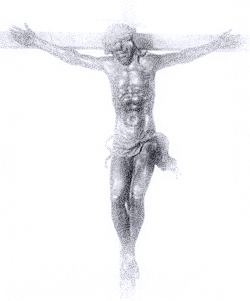
The men signed of the cross of Christ go gaily in the dark.
What’s Wrong with the World is dedicated to the defense of what remains of Christendom, the civilization made by the men of the Cross of Christ. Athwart two hostile Powers we stand: the Jihad and Liberalism...read more
Of esophageal cancer, with which he was diagnosed in 2010. Vanity Fair's In Memoriam. More links on that page to Hitchens' work.
A 2007 piece in which Hitchens commemorates the death of an American soldier in Iraq.
Comments (11)
The piece on the American soldier was actually rather interesting. I don't carry much admiration for Hitchens, but he could write well. I won't say rest in peace because I rather doubt he's resting peacefully at the moment...
The Elephant
Posted by The Masked Elephant | December 16, 2011 5:37 PM
All the more reason to pray that he "rest in peace"!
Posted by Jeff Culbreath | December 16, 2011 5:41 PM
Certainly I'm in favor of prayer. I meant using the phrase as an imperative, like "Have fun storming the castle." But maybe it's actually intended to be more like "May the force be with you." Still seems a bit odd to direct it to the person though. In this context anyway.
The Elephant
Posted by The Masked Elephant | December 16, 2011 6:29 PM
ME, the phrase is widely misused in the vernacular as directed to the person, but it derives from a traditional prayer to God for the soul of the departed: "Anima eius et animae omnium fidelium defunctorum per Dei misericordiam requiescant in pace."
Posted by Jeff Culbreath | December 16, 2011 7:11 PM
I say "misused" in a friendly way, as I myself have used it this way and don't object to the practice.
Posted by Jeff Culbreath | December 16, 2011 7:13 PM
Ahem ... I just realized you were referring to the title of the entry in your comment. Sorry! I think the present vernacular use of RIP as a "may the force be with you" send-off derives from its presence as a prayer fragment on Catholic tombstones. Think of it as the kind of prayer whereas one hopes the departed is aware of the prayer, so as to know he is loved and/or missed.
Posted by Jeff Culbreath | December 16, 2011 7:26 PM
I am between the lines of agnosticism and Christianity but one thing I've always admired about the Eastern Orthodox Church compared with Protestants is their ability and willingness to pray for the dead. I don't mention Catholics because I don't know where they stand here although I suppose they'd probably be okay with it. I don't see any reason why salvation could not occur postmortem. Hitchens would definitely need such a thing right now.
Posted by Ron | December 16, 2011 10:37 PM
We don't know what Christopher Hitchens would definitely need right now. There is no 'now' for him anymore. We ought to pray for him as an act of charity - even if we hope that he asked God for mercy before he died, and can rest in peace.
Christopher Hitchens was a talented journalist but not a profound thinker whose books will live long. Perhaps he was considered by many to be a 'hero of our time'.
Posted by Alex | December 17, 2011 4:22 AM
Indeed, Alex, because God is not in time, God may well take our prayers after Hitchens' death and on their strength choose to gift Hitchens with the grace of faith and repentance before his death.
Since God cannot possibly be less generous than his creatures, if some of his creatures pray for their (worldly) enemies to do good for them, can God do less good than to grant their prayers (or do something still better)? It is a pious belief that God will indeed grace our enemies with the good we beg of God for them.
Posted by Tony | December 17, 2011 10:34 AM
Reading a recent book review by Terry Eagleton I see he deigned to forgive Hitchens for criticizing Islam.
Understandable for we are only at war with that 1500 year old gift from the desert, and who cannot find tolerance in the modern heart. This is the sort of nonsense that Hitchens did deplore. If the term sui generis has any meaning or place it is ascribale to Hitchens. He could be a crank at times, he was always an individual thinker, brilliant, his writing surperb, his learning intimidating, and he could hold his booze. People say of others, "he will be missed", a cliche true perhaps in it's limitations, so true of Hitchens.
Posted by johnt | December 17, 2011 4:35 PM
Christopher Hitchens writes to Washington Poat: "Here is my challenge. Let Gerson name one ethical statement made, or one ethical action performed, by a believer that could not have been uttered or done by a nonbeliever.
[Yes, but Atheists have no philosophical or scientific basis for any moral statement made or action preformed in a godless amoral indifferent, uncaring raw material “matter in motion” universe where anything is possible, and everything is permissible.]
And here is my second challenge. Can any reader of this column think of a wicked statement made, or an evil action performed, precisely because of religious faith?
[Not in regard to an individual or society that TRULY operates consistently on the moral standards and values proclaimed by Christ, and on which the Christian worldview isfounded]
The second question is easy to answer, is it not? The first -- I have been asking it for some time -- awaits a convincing reply. By what right, then, do the faithful assume this irritating mantle of righteousness?
[ Because the standard of righteousness is that of a perfectly righteous Holy God, and the mantle is the perfect sinless life of Christ ].
They have as much to apologize for as to explain.
[Only if there is never to be any accountability for sin, evil and humanities open rebellion against God. Accompanied by the assertion that God should have no Sovereignty or dominion over His creation. In fact, as with every surgeon, God regards all sin as a deadly cancer that must be totally eradicated from the system, earthly and heavenly God well knows that even the most minuscule residual remaining cancer cell will rapidly spreads to destroy its host. Hence the need for Christ's redemptive atoning work on the cross, and our need for divine protection "in Christ" as our savior ]
Meaning, Hitchens had his feet planted firmly in mid air. He has failed to discern that both atheism and godless naturalism are themselves a "religion" founded on unproven blind faith assumptions. Both of which are founded on the UNPROVEN "blind faith" metaphysical"religious assumption that "philosophical" naturalism and godless materialism are true. Along with the unproven "blind faith metaphysical belief that science is the only real source of knowledge and truth. As pointed out by the Encyclopedia of Philosophy, another name for this metaphysical religious belief is SCIENTISM, not science.
Posted by John Heininger | July 22, 2015 3:16 AM